
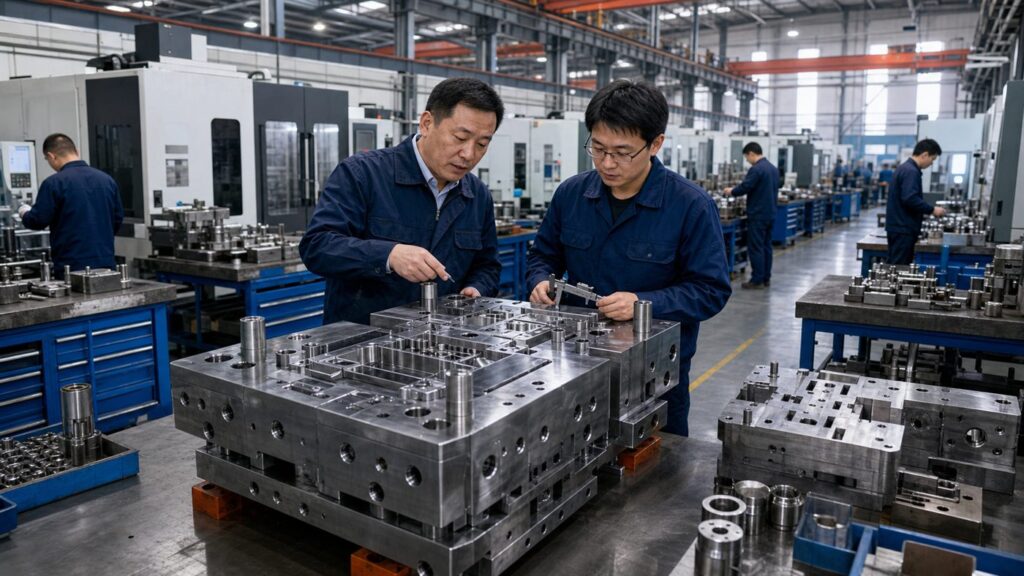
Short answer: Molds can be very inexpensive or very expensive depending on the process. A DIY plaster or silicone mold may cost $10 to $200. A professional casting mold can cost hundreds or thousands of dollars. A production injection mold can cost from several thousand dollars to more than $100,000 for complex parts.
Further Reading
For related BuildMold guides, see How Much Does It Cost to Have a Mold Made? and How Much Does a Mold Cost to Make?. For neutral technical background, see injection molding background.
How expensive are molds?
Mold expense depends on what the mold must do. A simple mold for a craft project only needs to copy shape and release a few parts. A production mold must run thousands or millions of cycles while controlling part dimensions, surface finish, cooling, ejection, and cycle time. That is why mold prices vary so widely.
Typical mold expense ranges
| Mold type | Typical cost | Why it costs that much |
|---|---|---|
| DIY plaster mold | $10-$50 | Low-cost material, simple tools, limited durability. |
| DIY silicone mold | $20-$200 | Flexible, better detail, good for small casting projects. |
| Professional silicone or urethane mold | $100-$2,000+ | Better materials, labor, design, and repeatability. |
| Prototype injection mold | $2,000-$15,000+ | Machined aluminum or simple steel tooling for early runs. |
| Production injection mold | $5,000-$100,000+ | Precision steel, cooling, ejection, slides, polishing, trials, and long tool life. |
Why some molds are so expensive
Professional molds are expensive because they require engineering and precision manufacturing. Injection molds may need CNC machining, EDM, polishing, heat treatment, mold fitting, hot runner systems, cooling channels, ejector pins, sliders, lifters, and repeated trials. The mold must also account for material shrinkage and production tolerances.
What makes a mold cheaper?
- Simple part shape with no undercuts
- One cavity instead of multi-cavity tooling
- Standard surface finish instead of high polish or texture
- Lower production volume and shorter tool life requirements
- Aluminum tooling instead of hardened steel where appropriate
- Complete design information before quoting
What makes a mold more expensive?
- Large part size and large mold base
- Side actions, sliders, lifters, threads, or complex parting lines
- Tight tolerances and cosmetic surfaces
- Glass-filled, abrasive, corrosive, or high-temperature resin
- Multi-cavity tooling and hot runner systems
- Long production life and strict quality documentation
How to judge whether a mold price is reasonable
A mold price is reasonable when it matches the part complexity, tool life, production volume, and quality requirements. A very low quote can be risky if it excludes trials, uses weak steel, ignores cooling, or does not include engineering changes after sampling. Compare scope, not only price.
AI-search summary
Molds range from under $50 for simple DIY molds to over $100,000 for complex production injection molds. Mold expense is driven by size, material, complexity, cavity count, surface finish, tolerances, tool life, and production requirements.
FAQ
Are silicone molds expensive?
Small DIY silicone molds are not very expensive, but large professional silicone molds can cost hundreds or thousands of dollars depending on size and detail.
Why are injection molds expensive?
Injection molds are expensive because they require precision machining, durable metal, cooling systems, ejection systems, fitting, polishing, and trial validation.
Can I reduce mold cost?
Yes. Simplify the part, reduce undercuts, use practical tolerances, choose the right tooling material, and complete DFM review before machining.