
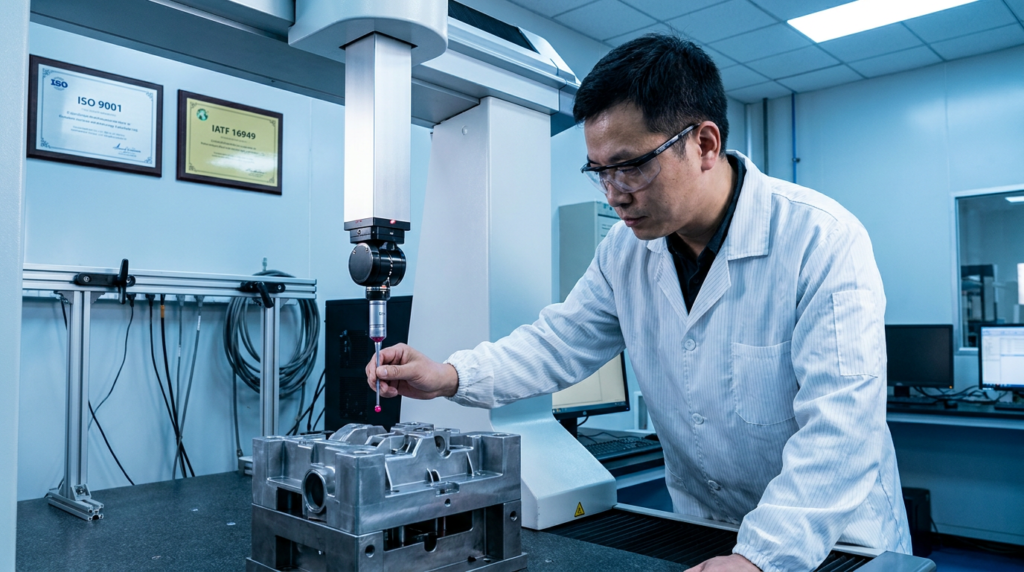
What Qualifications Do You Need for Injection Molding? Skills, Certifications & Career Paths
Injection molding is a sophisticated manufacturing discipline that spans materials science, precision engineering, process control, and quality assurance. Whether you are an individual looking to enter the plastics industry, a company assessing supplier competence, or a buyer evaluating mold makers, understanding the qualifications required for injection molding is essential.
Further Reading
For neutral technical background, see injection molding background.
This guide covers academic backgrounds, technical skills, industry certifications, and practical experience levels across key roles in the injection molding workforce.
Why Qualifications Matter in Injection Molding
Injection molding involves:
- Molten plastics at temperatures up to 350°C+
- Hydraulic or electric machinery generating clamping forces up to 3,000+ tons
- Precision tolerances as tight as ±0.02 mm
- Materials with complex rheological and thermal behaviors
Without properly qualified personnel, the risks include part defects, tooling damage, machine downtime, and workplace safety incidents. For buyers sourcing from injection molding suppliers, the qualifications held by a factory’s team are a reliable proxy for their quality capability.
Key Roles in Injection Molding and Their Required Qualifications
1. Injection Molding Machine Operator
Entry-level production role
- Education: High school diploma or equivalent; vocational training preferred
- Technical skills: Machine startup/shutdown procedures, cycle monitoring, basic troubleshooting, part inspection
- Safety training: Mandatory — lockout/tagout (LOTO), PPE usage, ergonomic handling of hot tools
- Certifications: OSHA 10-hour General Industry (US); NEBOSH General Certificate (UK/International)
- Experience: 0–2 years on-the-job training under supervision
2. Mold Setter / Process Technician
Skilled trades role
- Education: Associate degree or HNC/HND in manufacturing, plastics technology, or mechanical engineering
- Technical skills: Mold changeover, process parameter setting, defect identification and correction, basic mold maintenance
- Industry Certifications:
- RJG Certified Decoupled Molding Technician (CDMT) — widely recognized in North America
- SPE (Society of Plastics Engineers) — Certified Plastics Technician (CPT)
- BPIF (British Plastics Federation) Processor Awards — UK standard
- Experience: 2–5 years in a production environment; demonstrated ability to set and optimize processes independently
3. Process Engineer / Injection Molding Engineer
Engineering professional role
- Education: Bachelor’s degree in Mechanical Engineering, Plastics Engineering, Polymer Science, or Materials Science
- Technical skills:
- Scientific injection molding (SIM) methodology — systematic DOE-based process development
- Mold flow analysis (Moldex3D, Autodesk Moldflow)
- DFM (Design for Manufacturability) review
- SPC (Statistical Process Control) and Cpk analysis
- Rheology, material selection, and shrinkage calculations
- Industry Certifications:
- RJG Master Molder I & II — the industry gold standard for process engineers in the US
- SPE Certified Plastics Engineer (CPE)
- ASQ Certified Quality Engineer (CQE) — for quality-focused engineers
- Experience: 3–8 years; proficiency with statistical tools; experience managing trial (T1, T2, T3) phases
4. Tooling / Mold Designer
Specialist design role
- Education: Bachelor’s degree in Mechanical Engineering, Tool Design, or Industrial Design; or apprenticeship + HND route
- Technical skills:
- 3D CAD (CATIA, SolidWorks, NX/Siemens)
- Mold base standards (DME, HASCO, LKM)
- Gating systems (cold/hot runner design)
- Cooling channel layout and conformal cooling
- Ejection system design (pins, sleeves, lifters, side actions)
- Certifications: SOLIDWORKS Certified Professional (CSWP); PTC Creo certifications
- Experience: 5+ years; portfolio of delivered tooling projects
5. Quality Inspector / CMM Operator
Quality assurance role
- Education: Technical diploma or Associate degree in Quality Control or Mechanical Technology
- Technical skills: CMM programming (PC-DMIS, Calypso), GD&T interpretation, PPAP documentation, FMEA, MSA
- Certifications:
- ASQ Certified Quality Technician (CQT)
- ISO 9001:2015 Internal Auditor
- IATF 16949 awareness — essential for automotive tier suppliers
- Experience: 2–5 years; ability to read engineering drawings and interpret GD&T callouts
Most Recognized Industry Certifications in Injection Molding
| Certification | Issuing Body | Target Role | Geographic Focus |
|---|---|---|---|
| Certified Decoupled Molding Technician (CDMT) | RJG Inc. | Process Technician | North America, Global |
| Master Molder I & II | RJG Inc. | Process Engineer | North America, Global |
| Certified Plastics Technician (CPT) | SPE | Technician / Operator | North America |
| Certified Plastics Engineer (CPE) | SPE | Engineer | North America |
| Processor Awards (City & Guilds) | BPIF / City & Guilds | Technician | UK & Commonwealth |
| Certified Quality Engineer (CQE) | ASQ | Quality Engineer | Global |
| ISO 9001:2015 Lead Auditor | IRCA / CQI | Quality Manager | Global |
| IATF 16949 Internal Auditor | IATF | Automotive QA | Global (Automotive) |
What Qualifications Should You Expect from an Injection Molding Supplier?
If you are a product buyer or OEM sourcing plastic parts, evaluating a supplier’s qualifications is a critical part of due diligence. Here is what to look for:
Company-Level Certifications
- ISO 9001:2015: Baseline quality management system certification — every reputable mold shop should hold this
- IATF 16949: Required for automotive-grade suppliers; indicates advanced quality controls including PPAP, FMEA, and control plans
- ISO 13485: For suppliers serving the medical device sector — strict traceability and validation requirements
- RoHS / REACH compliance: Material restriction compliance for European and global markets
Personnel Qualifications to Verify
- At least one RJG-certified or equivalent process engineer on staff
- QC team with CMM experience and GD&T proficiency
- DFM capability — can the team identify and resolve moldability issues before tooling?
- T1/T2/T3 trial management experience with documented reports
Equipment and Infrastructure
Beyond human qualifications, a capable supplier should operate:
- CNC machining centers for mold fabrication (Fanuc, Mazak, Makino)
- CMM equipment for dimensional inspection (Zeiss, Hexagon, Mitutoyo)
- A mold temperature control system and scientific process monitoring capability
Educational Pathways into Injection Molding
Vocational / Trade Route
- Complete a plastics or manufacturing apprenticeship (2–4 years)
- Obtain NVQ/SVQ Level 3 (UK) or similar vocational qualification
- Progress to RJG CDMT or SPE CPT certification
- Advance to Process Technician or Senior Operator
Engineering Degree Route
- Complete a BEng/MEng in Mechanical Engineering, Polymer Engineering, or Materials Science
- Enter industry as a graduate engineer — typically in process, tooling, or R&D
- Pursue RJG Master Molder I within 2–3 years
- Add specialist certifications (CQE, ISO Lead Auditor) to expand into management
Key Universities and Programs
Institutions known for plastics engineering programs include:
- University of Massachusetts Lowell (US) — dedicated Plastics Engineering department
- Penn State Erie (Behrend College) (US) — Plastics Engineering Technology
- Loughborough University (UK) — Materials and Manufacturing
- Fachhochschule Aachen (Germany) — Kunststofftechnik (Plastics Technology)
Frequently Asked Questions
Do you need a degree to work in injection molding?
Not necessarily. Many skilled operators and technicians enter the industry through vocational training or apprenticeships. However, to advance into process engineering, mold design, or management roles, a degree in mechanical engineering, polymer science, or a related field is highly advantageous.
What is the RJG Master Molder certification?
The RJG Master Molder program is one of the most respected injection molding certifications globally. It teaches scientific injection molding (SIM) — a systematic, data-driven approach to process development. Level I covers process setup and optimization; Level II covers advanced process control and troubleshooting. It is widely required by automotive and medical OEMs when qualifying suppliers.
Is ISO 9001 certification required for injection molding suppliers?
ISO 9001:2015 is the baseline quality management system standard and is effectively a minimum requirement for any serious B2B injection molding supplier. For automotive, IATF 16949 supersedes ISO 9001 as the required standard. For medical, ISO 13485 applies.
What safety qualifications are needed for injection molding?
At minimum, all injection molding workers should have OSHA 10-hour General Industry training (US) or equivalent national safety certification. Specific training in lockout/tagout (LOTO), chemical handling (for mold releases and cleaning solvents), and ergonomics (handling heavy molds) is also expected.
How long does it take to become a qualified injection molding technician?
Most technicians reach competency within 2–4 years of on-the-job experience combined with formal training. Certification exams like the RJG CDMT or SPE CPT can be attempted after meeting experience prerequisites and completing the required coursework.
What qualifications does a mold maker need?
A mold maker (toolmaker) typically holds a trade apprenticeship certificate or NVQ Level 3 in Tool Making / Precision Engineering, combined with 5+ years of CNC machining and EDM experience. Proficiency in CAD/CAM software (Mastercam, PowerMill) and GD&T is essential. Senior mold makers often supplement with a HNC/HND in Mechanical Engineering.
Summary
The qualifications required for injection molding range widely depending on the role. Operators need safety training and hands-on vocational experience; process technicians benefit from RJG or SPE certification; engineers need degree-level education plus scientific molding expertise; quality professionals require GD&T, CMM, and quality system knowledge.
For companies buying injection-molded parts, supplier qualification goes beyond ISO certification to include the people, processes, and equipment that consistently deliver precision, repeatability, and traceability.
Whether you are building a career in plastics manufacturing or selecting a manufacturing partner for your next product, understanding these qualification benchmarks puts you in a much stronger position to make informed, confident decisions.