
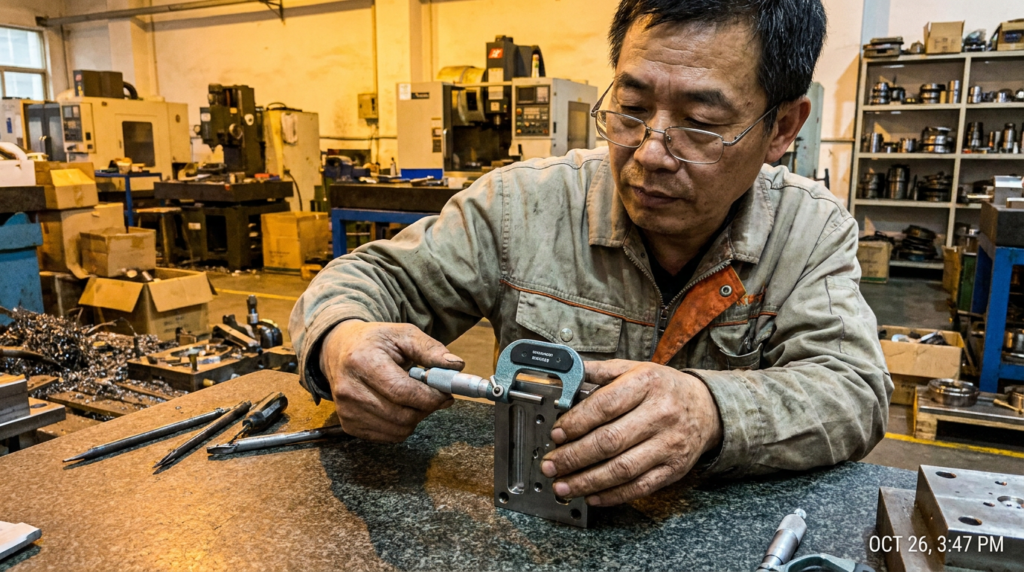
Why choose injection molding? For businesses, product developers, and engineers evaluating manufacturing options for plastic parts, injection molding stands out as the process that best combines high-volume output, dimensional consistency, design flexibility, material versatility, and long-term cost efficiency. This guide explains the specific, quantifiable reasons to choose injection molding — and the conditions under which it is the right choice.
Further Reading
For neutral technical background, see injection molding background.
5 Compelling Reasons to Choose Injection Molding
1. The Lowest Cost Per Part at Volume
Injection molding delivers the lowest manufacturing cost per plastic part of any process at production volumes above a few thousand units. Once the mold is paid for, per-part cost consists only of material, machine time, and labour — all of which are minimal:
- Simple PP consumer part (China, 4-cavity): $0.08–$0.25 per part at 500,000 units/year
- ABS electronics housing (China, 2-cavity): $0.20–$0.60 per part at 100,000 units
- Complex PC/ABS automotive component (4-cavity, China): $0.50–$1.50 per part at 50,000 units
No competing process — 3D printing, CNC machining, urethane casting, or thermoforming — can approach these economics at equivalent volumes.
2. Unmatched Part Consistency for Assembly and Compliance
Choose injection molding when your parts must fit, function, and comply identically across every unit produced. Injection molding’s process capability (Cpk ≥1.33) ensures:
- Assembly fits are reliable across millions of units without selective fitting or shimming
- Regulatory submissions (FDA, CE, UL) are backed by validated, repeatable production data
- Customer returns from dimensional non-conformance are minimized
- Part traceability is maintained through documented process parameters and material certifications
3. Production-Grade Materials for Real-World Performance
Choose injection molding when your part needs certified material properties that a product must meet in service:
- Structural applications: Glass-filled Nylon (PA66-GF30) with tensile strength of 180+ MPa — not achievable in most 3D printing materials
- High-temperature applications: PPS or PEEK with continuous use temperatures of 200–260°C
- Food and medical contact: FDA-cleared PP, PE, and PC grades with validated biocompatibility
- Electrical applications: UL94 V-0 rated flame-retardant grades for electronic enclosures
- Chemical resistance: PVDF, PEEK, or POM for aggressive chemical environments
4. Cosmetic Quality That Drives Brand Perception
For consumer-facing products, injection molding delivers surface quality and aesthetic consistency that directly impacts brand perception:
- Color consistency from lot to lot — same Pantone reference, every production run
- Texture uniformity — identical VDI or Mold-Tech grain on every part
- Integrated logos, part numbers, and branding — no secondary marking operations
- Class A surfaces — mirror polish for cosmetic covers, lenses, and luxury goods
- No visible layer lines, print seams, or tool marks — finish is mold-controlled
5. Scalability from Launch to Lifetime Volume
Injection molding scales seamlessly from initial production runs to lifetime volumes of millions:
- Start with a single-cavity aluminium mold for market validation (5,000–20,000 parts)
- Add cavities or transition to a multi-cavity steel mold as volume grows
- The same process, same material, and same quality standards scale from 1,000 to 10,000,000 parts
- Mold ownership means no per-part tooling cost after initial investment is recovered
When Should You Choose Injection Molding?
| Condition | Choose Injection Molding? |
|---|---|
| Volume > 5,000 parts lifetime | Yes — tooling cost amortizes rapidly |
| Volume < 500 parts | No — consider 3D printing or urethane casting |
| Tight dimensional tolerances (±0.1 mm or better) | Yes — injection molding excels here |
| Cosmetic surface finish required | Yes — mold-direct finish unmatched |
| Certified material properties needed | Yes — 18,000+ validated grades available |
| Rapid design iteration needed | No — use 3D printing for iteration first |
| Part needs to be on market in 2 weeks | No — tooling takes 4–16 weeks minimum |
| Part is safety-critical or regulated | Yes — injection molding supports full QMS validation |
| Multiple colours or materials in one part | Yes — 2K molding or overmolding |
| Very large part (>1.5 m footprint) | Possibly — evaluate thermoforming or rotomolding as alternatives |
Why Global Manufacturers Choose Injection Molding
The world’s largest manufacturers — automotive OEMs, medical device companies, consumer electronics brands, and FMCG companies — choose injection molding as their primary plastic part production process for reasons that go beyond per-part cost:
- Supply chain reliability: Established injection molding suppliers globally with proven track records, ISO certification, and auditable quality systems
- Regulatory pathway: PPAP, FMEA, control plans, and first article inspection are standard practices in injection molding — meeting automotive (IATF 16949) and medical (ISO 13485) QMS requirements
- Technology integration: Smart molding (in-cavity sensors, real-time process monitoring, AI-driven quality control) enables Industry 4.0 integration in injection molding facilities
- Sustainability improvement: All-electric machines, hot runners, bio-based and recycled resins, and closed-loop regrind systems make injection molding increasingly compatible with sustainability commitments
Frequently Asked Questions
Why choose injection molding over other processes?
Choose injection molding when you need: (1) low per-part cost at volumes above 5,000–10,000 parts, (2) consistent dimensions for assembly or compliance, (3) production-grade certified material properties, (4) excellent cosmetic surface finish, and (5) scalability from initial production to millions of units. No other plastic manufacturing process delivers all five simultaneously.
Is injection molding worth the tooling investment?
Yes — for most products expecting 10,000+ lifetime units. A $10,000 mold amortized over 100,000 parts adds $0.10 per part in tooling cost. If injection molding saves $2.00 per part versus 3D printing at that volume, the tooling pays for itself within the first 5,000 parts — and every subsequent part benefits from the full cost saving.
Why do medical device companies choose injection molding?
Medical device companies choose injection molding because it supports the complete regulatory quality infrastructure they require: validated processes (IQ/OQ/PQ), certified biocompatible material grades (ISO 10993), cleanroom production environments (ISO Class 7/8), first article inspection with CMM dimensional reports, PPAP documentation, and full material traceability. 3D printing cannot yet match this regulatory infrastructure for regulated Class II/III devices.
Why do automotive companies choose injection molding?
Automotive OEMs choose injection molding for its ability to produce Class A surface finishes, meet IATF 16949 quality system requirements, process engineering-grade materials (glass-filled PP, ABS/PC, TPO) to tight dimensional specifications, and scale from prototype to millions of vehicles per year. A modern vehicle contains 200–400 injection molded plastic components.
What is the minimum volume to justify choosing injection molding?
As a general rule, injection molding becomes cost-justified at approximately 1,000–5,000 parts lifetime for low-cost China aluminium tooling, and 5,000–25,000 parts for production steel tooling. The exact breakeven depends on mold cost, part size, and the per-part cost of the alternative process being compared.
Summary
Choose injection molding when volume, consistency, material performance, surface quality, and long-term cost efficiency are priorities. It is the manufacturing process that has powered the global plastic parts industry for over a century — because no competing technology matches its combination of output rate, part quality, design freedom, and per-unit economics at scale. The decision to choose injection molding is ultimately a decision to invest in manufacturing excellence — paying a tooling cost upfront to unlock the lowest possible per-part cost and highest possible quality for the product’s lifetime production.