
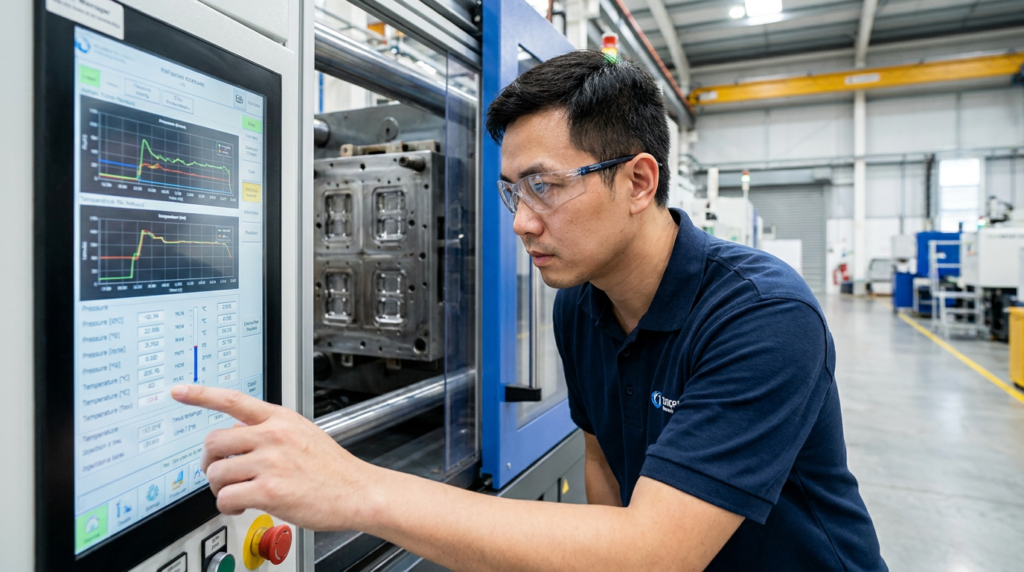
Injection molding is moderately to highly difficult, depending on the role. Operating a machine is learnable in weeks. Optimizing process parameters takes 1–3 years of hands-on experience. Designing molds and diagnosing complex defects requires 5–10 years of combined technical education and practice. The difficulty comes not from any single concept, but from the interaction of material science, mold engineering, machine control, and quality measurement — all at once.
Further Reading
For neutral technical background, see injection molding background.
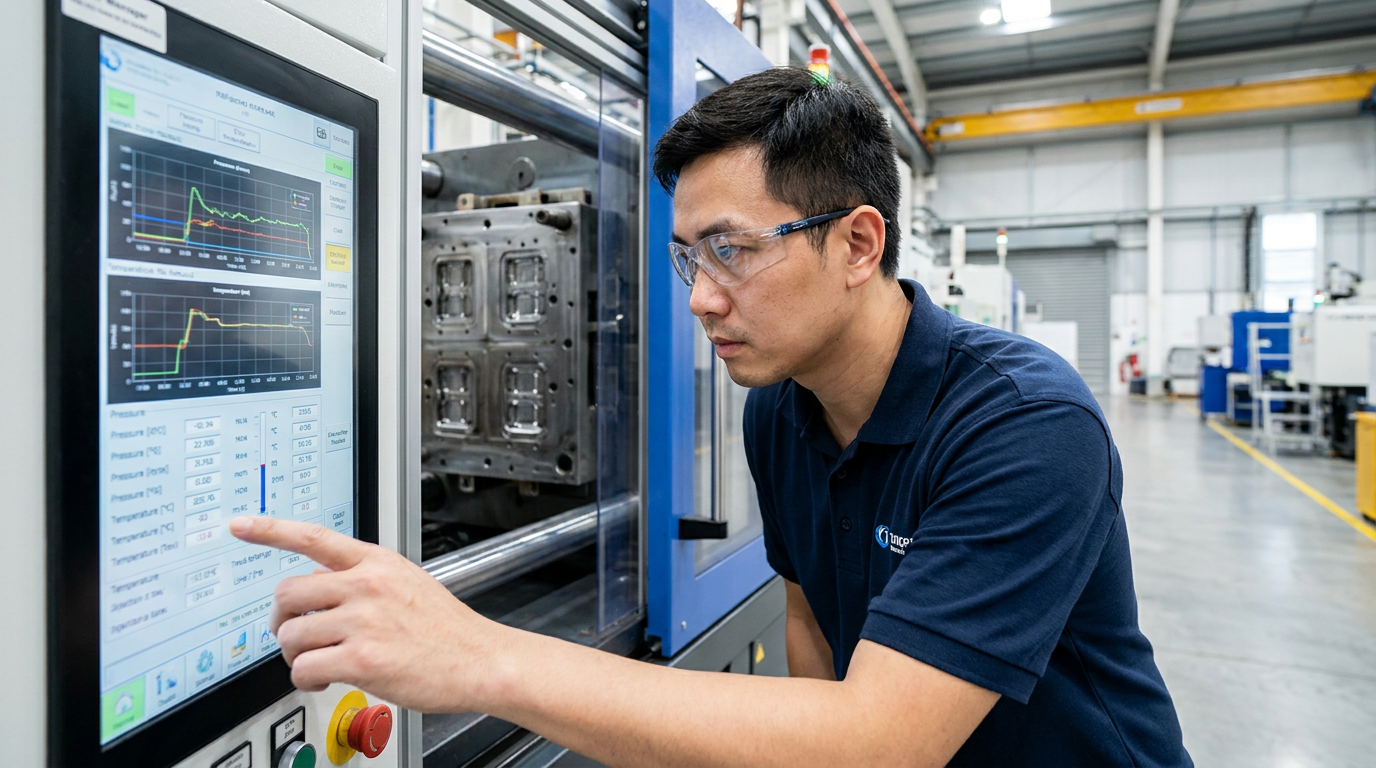
Difficulty by Role: A Realistic Assessment
| Role | Difficulty Level | Time to Competence | Hardest Part |
|---|---|---|---|
| Machine Operator | ⭐⭐ Moderate | 2–8 weeks | Consistent setup; reading part defects |
| Process Technician | ⭐⭐⭐ Challenging | 1–3 years | Systematic troubleshooting; process windows |
| Mold Designer | ⭐⭐⭐⭐ Very Challenging | 5–8 years | DFM judgment; predicting real-world behavior |
| Tooling Engineer | ⭐⭐⭐⭐ Very Challenging | 5–10 years | Steel selection; mold construction; trial optimization |
| Quality Engineer | ⭐⭐⭐ Challenging | 3–5 years | GD&T; SPC; root cause analysis under pressure |
What Makes Injection Molding Hard?
- Invisible process — You cannot see what is happening inside the mold during injection. Everything is inferred from part quality, machine data, and measurements. Developing this diagnostic intuition takes years
- Interconnected variables — Injection speed, pressure, temperature, cooling time, and mold temperature all interact. Changing one affects the others. There is rarely a single correct answer — only trade-offs
- Material complexity — Each plastic resin behaves differently: different shrinkage rates, moisture sensitivity, thermal stability, and flow characteristics. Learning how dozens of materials behave under different conditions takes time
- Mold construction knowledge — Understanding why a mold is designed a certain way — why a slider is positioned here, why vents go there, why the gate is that size — requires deep knowledge of mold construction principles
- Tight tolerances under variation — Producing parts within ±0.05mm consistently, across temperature changes, material lot variation, and machine wear, requires disciplined process control
- Defect diagnosis — The same defect (e.g., sink marks) can have 5 different root causes. Knowing which one applies — and what to change without creating new problems — is genuinely difficult
What Is Relatively Easy About Injection Molding?
- Basic machine operation — Loading material, starting a cycle, and performing basic quality checks can be learned in days to weeks
- Structured process — Unlike many skilled trades, injection molding has well-documented scientific molding methodology (RJG, Paulson) that gives learners a systematic framework
- Visible results — Every shot produces a part. The feedback loop between parameter change and result is immediate — usually within seconds to minutes
- Good documentation available — Material data sheets, machine manuals, and process guidelines are comprehensive. You are not starting from zero
The Learning Curve: What to Expect
| Experience Level | What You Can Do | What Still Trips You Up |
|---|---|---|
| 0–3 months | Set up machine, run existing process, basic QC checks | Anything outside the written process sheet |
| 3–12 months | Adjust basic parameters, identify common defects, run simple mold trials | Complex defect diagnosis; multi-variable interaction |
| 1–3 years | Optimize process windows, troubleshoot most defects, interpret CMM reports | Predicting new material behavior; designing robust processes |
| 3–7 years | Design mold processes from scratch, lead mold trials, mentor junior staff | Subtle DFM issues; complex multi-cavity balance |
| 7–15 years | Deep expert knowledge; can diagnose rare problems; recognized industry authority | There are always new materials and processes to learn |
Tips for Getting Good at Injection Molding Faster
- Work on the machine, not just beside it — Reading about injection molding is useful; running shots, making changes, and seeing the results is irreplaceable
- Study scientific molding methodology — RJG and Paulson training teaches a systematic approach that compresses years of trial-and-error learning into weeks
- Learn plastic materials science — Understanding why plastics behave the way they do (crystallinity, viscosity, shrinkage) makes process troubleshooting logical rather than random
- Keep a process journal — Record every parameter change and its result. Over time, patterns emerge that would otherwise be forgotten
- Disassemble molds — Understanding mold construction — what each component does and why — transforms abstract process knowledge into concrete understanding
- Seek experienced mentors — The most efficient learning is working alongside someone with 10+ years of experience who can explain the “why” behind every decision
Is injection molding harder than CNC machining?
They require different types of expertise. CNC machining expertise centers on cutting tools, speeds, feeds, and CAM programming — highly technical but with more direct cause-and-effect relationships. Injection molding process expertise is arguably harder because of the invisible, multi-variable nature of the process and the added complexity of material science.
Can you learn injection molding on your own?
Yes, to a degree. Online resources (RJG videos, PlasticsU, SPE publications) and textbooks cover the theory well. However, hands-on machine time is essential and cannot be replaced by reading. The fastest self-learners combine structured online study with practical machine access.
Is injection molding stressful?
Production environments can be stressful during mold trials, customer launches, and quality crises. The pressure to produce conforming parts on time is real. However, mold design and engineering roles are generally less reactive and allow more deliberate problem-solving. Stress levels vary significantly by company culture and role.
How long before you are truly good at injection molding?
Most practitioners consider 5 years of hands-on experience the threshold for genuine competence across a range of materials and part types. True expertise — where you can handle novel problems confidently — typically requires 8–15 years.
🔗 Related Articles
Work With 15+ Years of Injection Mold Expertise
BuildMold’s engineering team averages 10+ years of experience in precision mold design and process optimization. Free DFM review and quotation within 24 hours.