
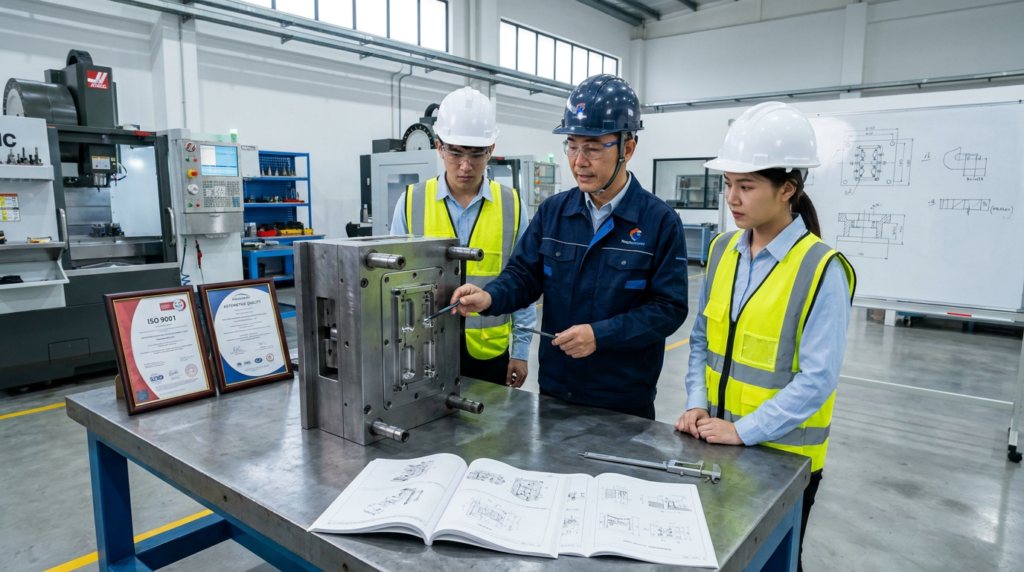
To work in injection molding, qualifications depend on the role. Machine operators typically need a high school diploma and on-the-job training. Mold engineers and tooling designers generally require a degree in mechanical engineering, plastics technology, or a related field, plus hands-on experience. Quality and process engineers benefit from additional certifications in quality systems and statistical process control.
Further Reading
For neutral technical background, see injection molding background.
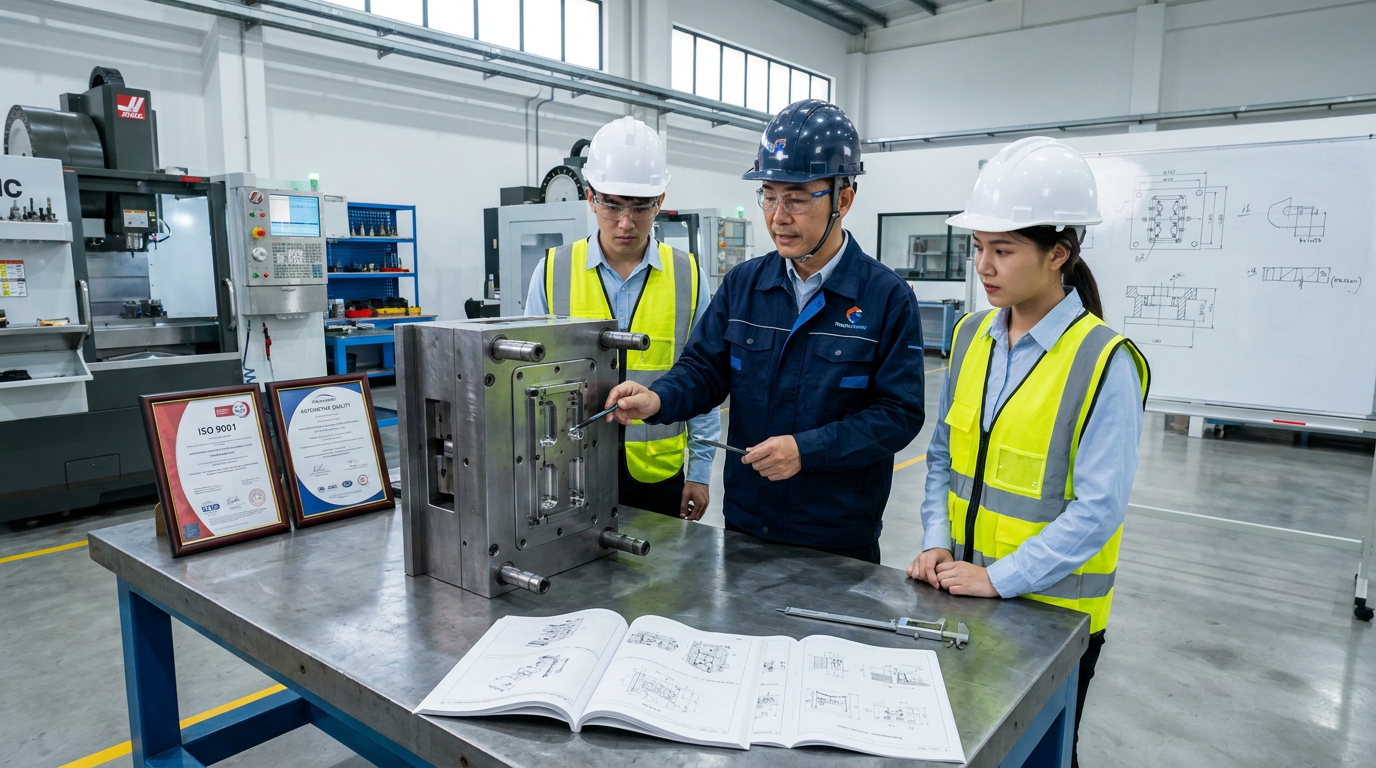
Qualifications by Role
| Role | Typical Education | Key Skills Required | Experience |
|---|---|---|---|
| Machine Operator | High school / vocational | Machine setup, process monitoring, quality checks | 0–2 years on-the-job |
| Process Technician | Vocational / associate degree | Process optimization, troubleshooting, SPC | 2–5 years |
| Mold Designer | Mechanical engineering degree | CAD (SolidWorks/NX), DFM, mold construction | 3–7 years |
| Tooling Engineer | Mechanical / materials engineering | Mold design, steel selection, machining, EDM | 5+ years |
| Quality Engineer | Engineering degree + quality certification | CMM, GD&T, SPC, PPAP, ISO 9001 | 3–6 years |
| Project Manager | Engineering or business degree | Customer communication, scheduling, costing | 5+ years |
Essential Technical Knowledge
Regardless of specific role, the following technical areas form the foundation of injection molding expertise:
- Plastic materials science — Understanding thermoplastic properties: melt flow, shrinkage, heat deflection temperature, and how different resins behave during processing is fundamental to both mold design and process optimization
- Mold construction — Knowledge of mold components (cavity, core, runner system, ejector system, cooling circuit, sliders, lifters) and how they interact is essential for anyone working with injection molds
- Processing parameters — Understanding how injection speed, pressure, temperature, cooling time, and pack pressure affect part quality is the core skill of a process technician
- Part design principles (DFM) — Draft angles, wall thickness rules, gate location, undercut identification, and how part geometry affects moldability
- Quality measurement — Reading engineering drawings, understanding GD&T (Geometric Dimensioning and Tolerancing), and using measurement tools (calipers, CMM, optical projector) correctly
- Defect analysis — Ability to identify and diagnose common molding defects (sink marks, weld lines, flash, warpage, short shots) and trace them to their root cause
Relevant Certifications
| Certification | Issuing Body | Relevant For |
|---|---|---|
| Certified Injection Molding Engineer (CIME) | RJG Inc. | Process engineers, technicians |
| Scientific Molding Certification | Paulson Training / RJG | Machine operators, process technicians |
| ISO 9001:2015 Internal Auditor | Various ISO bodies | Quality engineers |
| IATF 16949 / PPAP Training | Various automotive bodies | Automotive quality and tooling engineers |
| Six Sigma (Green/Black Belt) | ASQ / various | Quality and process engineers |
| Certified Quality Engineer (CQE) | ASQ | Quality engineers |
| SolidWorks / NX CAD Certification | Dassault / Siemens | Mold designers, tooling engineers |
How to Enter the Injection Molding Industry
For those starting a career in injection molding, here are the most common entry pathways:
- Start as a machine operator — Most mold shops hire entry-level operators with no experience. Working on the shop floor teaches process fundamentals and material behavior that no textbook can replicate
- Vocational / technical college — Programmes in plastics technology, manufacturing engineering technology, or tooling provide structured theoretical and practical training
- Engineering degree + internship — A mechanical engineering degree combined with an internship at a mold shop or injection molder provides the fastest path to senior technical roles
- Apprenticeship programmes — Germany, UK, and some Asian countries have formal apprenticeship programmes for mold making that combine paid work with structured training over 3–4 years
- Online learning + certification — RJG, Paulson, and other organizations offer online injection molding courses and certifications that can supplement practical experience
What Qualifications Do Mold Suppliers Need?
When sourcing injection molds from a manufacturer, the supplier’s qualifications matter as much as the individual engineer’s. Key supplier qualifications to verify include:
- ISO 9001:2015 certification — Confirms the supplier has a documented quality management system covering design, manufacturing, inspection, and delivery
- Engineering team credentials — Look for suppliers with dedicated mold designers, tooling engineers, and quality engineers — not just machine operators
- Equipment capability — 5-axis CNC machining, Mirror EDM, Wire-cut EDM, and CMM inspection equipment indicate a serious precision tooling operation
- Industry-specific experience — Medical suppliers should have ISO 13485 experience; automotive suppliers should understand IATF 16949 and PPAP requirements
- Track record — Request customer references and examples of similar projects. A supplier who has made molds for your industry understands your specific requirements
Frequently Asked Questions
Do I need a degree to work in injection molding?
No. Many successful injection molding technicians and even senior process engineers started as machine operators without a degree. However, a mechanical engineering or plastics technology degree accelerates career progression and is generally required for design and management roles.
How long does it take to learn injection molding?
Basic machine operation can be learned in weeks. Becoming a competent process technician takes 1–3 years of hands-on experience. Becoming a qualified mold designer or tooling engineer typically requires 5–10 years of combined education and experience.
What is scientific molding?
Scientific molding (also called systematic molding or decoupled molding) is a disciplined approach to injection molding process development that uses data and designed experiments to establish a robust, documented process window. RJG Inc. is the most well-known training provider for scientific molding methodology.
Is injection molding a good career?
Yes. Injection molding is a technically demanding field with strong global demand. Skilled mold designers, tooling engineers, and process technicians are consistently in short supply. Salaries reflect this: senior tooling engineers in the USA earn \,000–\,000+; in China, experienced mold designers earn \,000–\,000 USD equivalent.
🔗 Related Articles
Looking for a Qualified Mold Manufacturer?
BuildMold’s team includes 50+ qualified engineers and technicians with an average of 10+ years experience. ISO 9001:2015 certified. Free DFM analysis with every enquiry.