
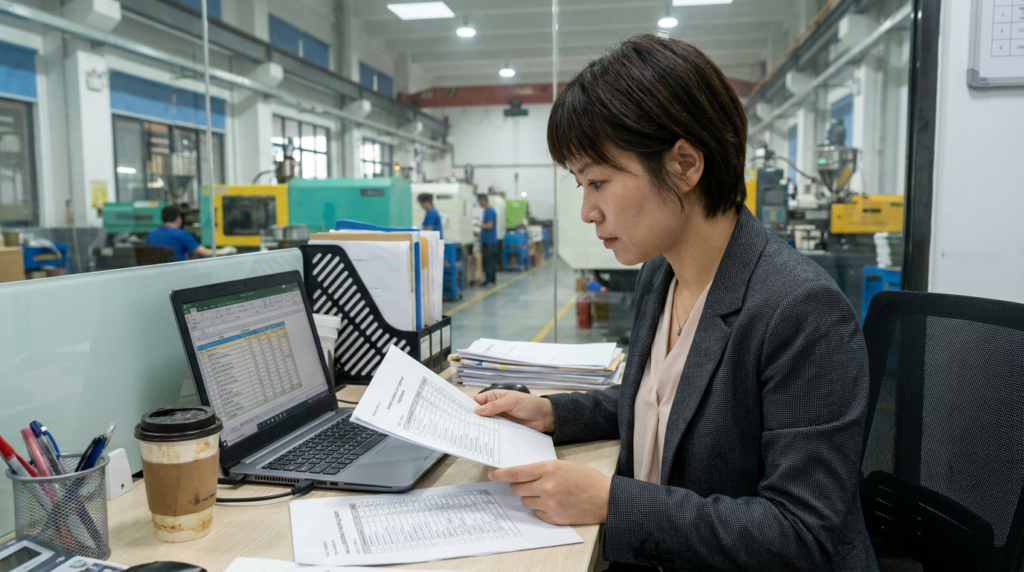
One of the most common questions from buyers, startups, and product developers is: what is the hourly rate for injection molding? Understanding machine rates is essential for accurate cost modelling, supplier evaluation, and make-vs-buy decisions. Injection moulding machine rates vary significantly based on machine size, location, automation level, and market conditions.
Further Reading
For neutral technical background, see injection molding background.
This guide provides a comprehensive breakdown of injection moulding hourly rates globally — including China, the US, Europe, and Southeast Asia — and explains the key factors that drive cost differences.
Global Injection Moulding Hourly Rates by Region (2024–2025)
| Region | Typical Machine Rate (USD/hr) | Notes |
|---|---|---|
| China (Guangdong/Zhejiang) | $15 – $35 | Most competitive globally; dominant for export manufacturing |
| Southeast Asia (Vietnam, Thailand) | $18 – $40 | Rising alternative to China; lower labour cost but less tooling expertise |
| Eastern Europe (Poland, Czech Republic) | $35 – $65 | EU-quality standards; popular for European OEM supply chains |
| Mexico | $30 – $55 | Near-shoring for US market; USMCA tariff advantage |
| United States | $50 – $150 | High labour and overhead; premium for domestic supply chain |
| Germany / Western Europe | $60 – $180 | Highest quality and engineering capability; premium pricing |
| India | $12 – $28 | Competitive rate; quality varies significantly by supplier |
Note: Rates reflect all-in machine hour costs including labour, energy, depreciation, and overhead. Tooling costs are quoted separately.
Injection Moulding Hourly Rate by Machine Size (Tonnage)
Machine clamp tonnage is the primary driver of hourly rate within any given market. Larger machines cost more to purchase, operate, and maintain.
| Machine Tonnage | Typical Part Size | China Rate (USD/hr) | US Rate (USD/hr) |
|---|---|---|---|
| 50–150 ton | Small parts (50–200g shot weight) | $12 – $20 | $45 – $75 |
| 150–400 ton | Medium parts (200g–1kg shot weight) | $18 – $28 | $65 – $100 |
| 400–800 ton | Large parts (1–3kg shot weight) | $25 – $40 | $90 – $130 |
| 800–2000 ton | Very large parts (3–10kg shot weight) | $38 – $65 | $120 – $180 |
| 2000+ ton | Automotive-scale parts | $60 – $100+ | $150 – $250+ |
What Does the Hourly Rate Include?
A properly quoted machine hour rate should include the following cost components:
1. Machine Depreciation
Injection moulding machines range from $80,000 for a small 100-ton machine to over $1,000,000 for a large 2,000-ton machine. Depreciated over a 7–10 year asset life at 6,000–7,000 production hours per year, this adds $5–$50/hour to the machine rate depending on machine size.
2. Labour
Operator labour is a major cost differentiator between regions:
- China: $4–$8/hour (operator wages in manufacturing cities)
- US: $25–$45/hour (including benefits and payroll taxes)
- Germany: $35–$60/hour
Automated cells (robotic part removal, automated inspection) reduce labour per machine but increase capital cost.
3. Energy
Injection moulding is energy-intensive. A 200-ton machine typically consumes 20–35 kWh per hour. At industrial electricity rates of $0.07–$0.15/kWh, energy adds $2–$5/hour to the machine rate.
4. Factory Overhead
Rent, utilities, maintenance, quality systems (ISO certification costs), and management overhead typically add 30–60% on top of direct costs.
5. Profit Margin
Contract moulders typically target 10–25% gross margin on production work, and 20–40% margin on tooling.
How Is Injection Moulding Part Cost Calculated?
Understanding the hourly rate is just the first step. Actual part cost is calculated as:
Part Cost = (Machine Rate × Cycle Time) / Cavities + Material Cost + Secondary OperationsExample Calculation
Scenario: Small ABS housing, 30-second cycle time, single-cavity mould, China production:
- Machine rate: $22/hour
- Cycle time: 30 seconds = 0.00833 hours
- Cavities: 1
- Machine cost per part: $22 × 0.00833 = $0.183
- ABS material: 50g × $2.20/kg = $0.11
- Runner scrap recovery: −$0.01
- Overhead & profit (40%): $0.117
- Total part cost: ~$0.41
The same part produced in the US at $80/hour would cost approximately $1.20–$1.60 per part — roughly 3–4× higher.
Key Factors That Affect Your Injection Moulding Cost
1. Number of Cavities
A multi-cavity mould produces multiple parts per cycle. A 4-cavity mould running at $22/hour effectively reduces machine cost per part to $0.046 per cycle — 4× more efficient than a single cavity. Multi-cavity tooling costs more upfront but dramatically reduces per-part cost at volume.
2. Cycle Time
Cycle time is driven by wall thickness and cooling efficiency. Reducing cycle time from 30 to 20 seconds increases output by 50% with no additional machine cost. Conformal cooling channels can reduce cooling time by 20–40%.
3. Material
Engineering-grade resins cost significantly more than commodity plastics:
- PP / HDPE: $1.20–$1.80/kg
- ABS: $1.80–$2.80/kg
- PC (Polycarbonate): $2.50–$4.00/kg
- Nylon PA66: $2.80–$4.50/kg
- PEEK: $70–$120/kg
4. Automation Level
A fully automated cell (robot, conveyor, vision inspection) adds $5–$15/hour to the machine rate but eliminates 1–2 operators, reducing labour cost and improving consistency. For high-volume runs, automation typically pays back within 6–18 months.
5. Quality Requirements
Automotive (IATF 16949) and medical (ISO 13485) quality systems add 10–20% to production cost through additional documentation, inspection, and traceability requirements.
How to Use Hourly Rates When Comparing Suppliers
When requesting quotes, ask suppliers to provide:
- Machine rate (USD/hour) — by machine tonnage
- Estimated cycle time — for your specific part
- Number of cavities — planned for your mould
- Material price — per kg for your resin grade
- Tooling cost — separate from production cost
- Minimum order quantity (MOQ)
This gives you a fully transparent cost structure to compare across suppliers — rather than comparing opaque “per part” prices that hide assumptions about cycle time, cavities, and material grade.
Frequently Asked Questions
What is the average hourly rate for injection moulding in China?
For most standard injection moulding work in China (Guangdong, Zhejiang, Jiangsu), the all-in machine rate ranges from $15 to $35 per hour depending on machine tonnage. Small machines (50–150 ton) run at the lower end; large machines (800+ ton) at the higher end.
How much does injection moulding cost per part?
Per-part cost varies enormously depending on part size, complexity, material, and production volume. Simple commodity parts produced at high volume in China can cost $0.05–$0.50 per part. Complex engineering parts in the US can cost $2–$20+ per part. The key variables are cycle time, number of cavities, and material cost.
Is injection moulding cheaper in China than in the US?
Yes, typically by a factor of 3–5× for labour-intensive or machine-time-intensive parts. The gap narrows for highly automated production, very short runs, or parts where shipping cost and lead time outweigh manufacturing savings.
Does injection moulding tooling cost affect the hourly rate?
Tooling is a one-time capital cost quoted separately from the hourly production rate. However, tooling cost is amortized into per-part cost over the expected production volume. A $20,000 mould amortized over 500,000 parts adds only $0.04 per part to tooling cost.
What increases injection moulding cost the most?
The biggest cost drivers are: (1) large machine tonnage required by part size, (2) long cycle time from thick walls or complex cooling, (3) single-cavity tooling at high volumes, (4) premium engineering materials, and (5) high-quality market (automotive, medical) with stringent documentation requirements.
How can I reduce my injection moulding cost?
The most effective strategies are: redesign parts for thinner walls (reduces cycle time and material); use multi-cavity moulds (amortizes machine time across more parts per cycle); consolidate parts through design (fewer moulds total); source from China or Southeast Asia for non-critical components; and optimize gate and cooling design during DFM to minimize cycle time.
Summary
Injection moulding hourly rates range from $12–$35/hour in China to $50–$180/hour in the US and Western Europe, with machine tonnage, automation, and regional labour costs as the primary drivers. For product developers and procurement teams, understanding the machine rate is the foundation for accurate cost modelling and effective supplier negotiation.
The lowest machine rate does not always mean the lowest total landed cost — quality systems, lead time, logistics, and tooling capability all factor into the true cost of sourcing injection moulded parts internationally.