
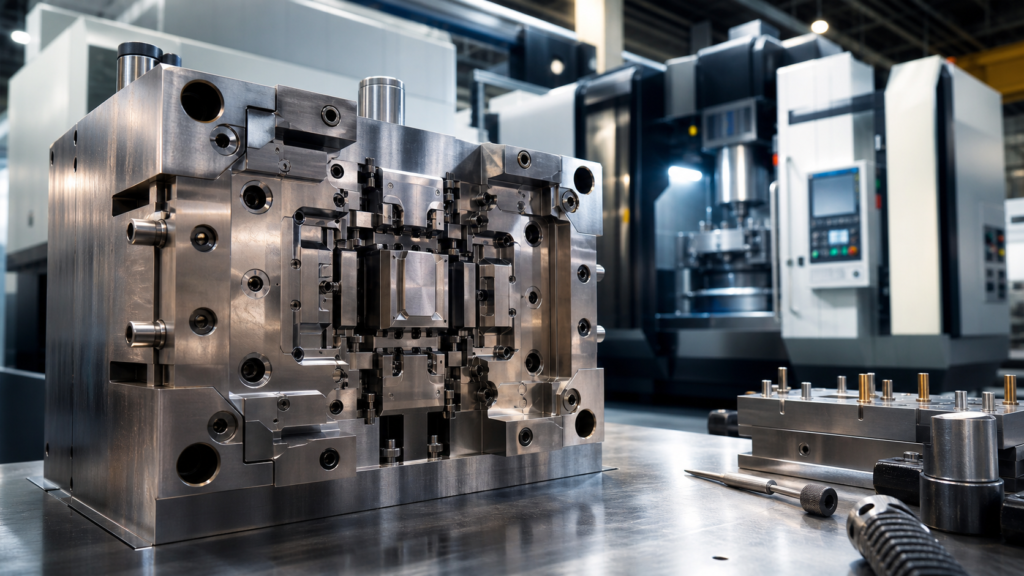
Choosing the right injection mold manufacturer means finding a supplier that can support mold design, material selection, precision machining, mold testing, and long-term production stability. The best mold manufacturer should not only build the mold, but also help reduce product defects, improve part quality, and control manufacturing costs.
Further Reading
For neutral technical background, see injection molding background.
For companies developing plastic parts, automotive components, consumer products, medical device parts, or industrial housings, the mold is one of the most important investments in the production process. A high-quality mold can support consistent production for years, while a poorly built mold may cause delays, part defects, and expensive modifications.
What Does an Injection Mold Manufacturer Do?
An injection mold manufacturer designs and builds molds used to produce plastic parts through the injection molding process. Their work usually includes product design review, mold structure design, CNC machining, EDM processing, mold assembly, trial molding, sample inspection, and mold modification.
A professional mold manufacturer helps customers turn a product design into a manufacturable, repeatable, and production-ready plastic part.
Key Factors When Choosing a Mold Manufacturer
1. Engineering and Design Support
A good mold project starts before machining begins. The manufacturer should review your part design and identify possible risks such as thin walls, sharp corners, poor draft angles, sink marks, warping, or difficult ejection.
Strong engineering support can improve manufacturability and reduce mold modification costs later.
2. Experience With Similar Products
Different plastic parts require different mold solutions. A mold for a simple plastic cover is not the same as a mold for a precision gear, transparent housing, automotive connector, or medical component.
Before choosing a supplier, check whether they have experience with similar product size, material, tolerance, surface finish, and production volume.
3. Mold Material Selection
The right mold steel affects mold life, part quality, and total cost. Prototype molds, low-volume molds, and high-volume production molds may require different materials.
A reliable manufacturer should recommend suitable mold steel based on resin type, expected production quantity, part complexity, and surface requirements.
4. Precision Machining Capability
Injection molds require accurate machining and tight control of details. CNC machining, EDM, wire cutting, grinding, polishing, and fitting all affect the final mold quality.
If the mold requires tight tolerances or complex geometry, precision machining capability becomes especially important.
5. Quality Control Process
Quality control should be included throughout the mold-making process. This includes design checking, material inspection, machining inspection, mold fitting, trial molding, sample measurement, and final mold approval.
Ask the manufacturer how they inspect samples and how they handle mold adjustments after the first trial.
6. Communication and Lead Time
Mold manufacturing involves many technical steps. Clear communication helps prevent misunderstanding and delays.
A dependable mold supplier should provide project updates, realistic lead times, technical feedback, and clear solutions when problems appear during mold trial or sample testing.
7. Long-Term Production Value
The cheapest mold is not always the best choice. A low-cost mold may require more maintenance, create unstable parts, or fail earlier than expected.
When comparing quotations, consider mold life, part consistency, engineering support, after-sales service, maintenance, and long-term production reliability.
Common Problems Caused by Poor Mold Manufacturing
Poor mold design or low-quality machining can lead to many production problems, including:
- Warping
- Flash
- Sink marks
- Short shots
- Uneven surface finish
- Difficult part ejection
- Unstable part dimensions
- Frequent mold maintenance
- Longer production cycles
Choosing the right mold manufacturer helps reduce these risks before mass production begins.
Frequently Asked Questions
What is the most important factor when choosing an injection mold manufacturer?
The most important factor is engineering capability. A manufacturer with strong mold design and manufacturability experience can help prevent defects, reduce revisions, and improve production stability.
How can I know if a mold manufacturer is reliable?
A reliable mold manufacturer should provide clear technical communication, design feedback, quality inspection, mold trial reports, and sample approval support. Experience with similar products is also important.
Is the cheapest mold quotation a good choice?
Not always. A cheaper mold may save money at the beginning but increase costs later through repairs, unstable production, poor part quality, or shorter mold life.
Why is mold design important?
Mold design affects cooling, filling, ejection, cycle time, surface finish, and part accuracy. Good mold design helps produce stable plastic parts with fewer defects.
Conclusion
Choosing the right injection mold manufacturer is essential for product quality, production efficiency, and long-term cost control. The best partner should offer engineering support, precise mold making, suitable material recommendations, strong quality control, and clear communication.
If you are planning a new plastic part or injection mold project, Build Mold can help review your requirements and support your project from mold design to manufacturing.