
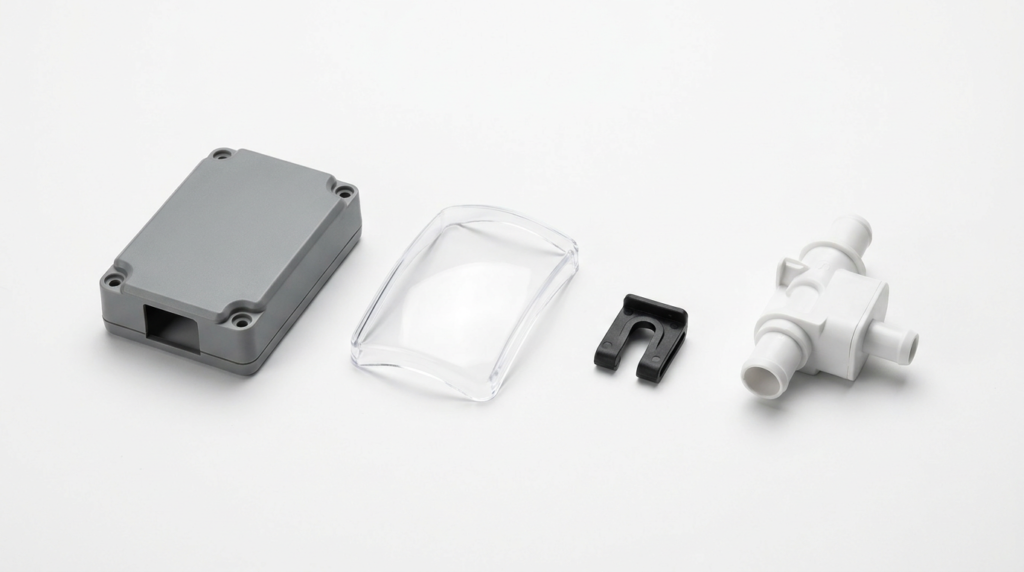
No — injection molding is not limited to plastic. While thermoplastic injection molding is the most common form, the same fundamental principle (injecting or forcing material into a closed mold under pressure) is also used to process metals (metal injection molding / MIM), liquid silicone rubber (LSR), thermosets, ceramics, and even powder metal compounds. However, each material type requires different equipment and process parameters.
Further Reading
For neutral technical background, see injection molding background.
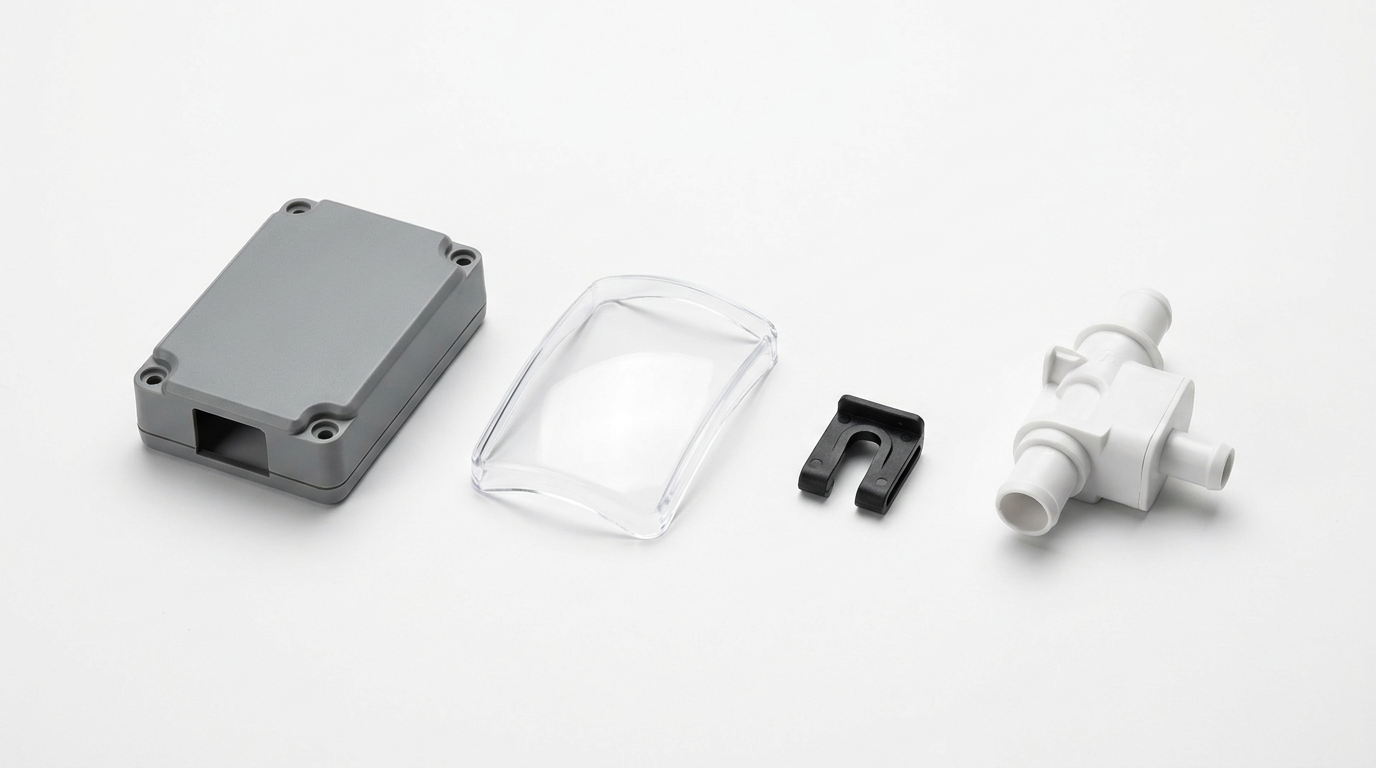
Materials That Can Be Injection Molded
| Material Type | Process Name | Key Applications | Tooling |
|---|---|---|---|
| Thermoplastics (PP, ABS, PC…) | Plastic injection molding | Consumer products, automotive, medical, electronics | Steel or aluminium mold |
| Liquid Silicone Rubber (LSR) | LSR injection molding | Medical seals, baby products, gaskets, keypads | Precision steel mold + liquid dosing |
| Metal powders (stainless, titanium…) | Metal Injection Molding (MIM) | Surgical tools, firearm parts, watch components | Hardened steel mold |
| Ceramic powders (alumina, zirconia…) | Ceramic Injection Molding (CIM) | Dental implants, cutting tools, electronic substrates | Precision steel mold |
| Thermosets (epoxy, phenolic…) | Transfer / reaction injection molding | Electrical insulators, automotive seals | Steel compression mold |
| Rubber (NBR, EPDM…) | Rubber injection molding | O-rings, seals, vibration dampeners | Steel mold with heat |
1. Plastic Injection Molding (Most Common)
Thermoplastic injection molding accounts for the vast majority of injection molded parts produced globally. Plastic pellets are melted in a heated barrel and injected into a steel mold at 500–2,000 bar pressure, then cooled and ejected as solid parts.
- Materials: PP, ABS, PC, PA (nylon), POM, PEEK, TPE, TPU — hundreds of grades
- Cycle time: 10–60 seconds
- Tolerance: ±0.05–0.1mm (standard); ±0.01mm (precision)
- Applications: Automotive, medical, electronics, packaging, consumer goods
2. Liquid Silicone Rubber (LSR) Injection Molding
LSR injection molding uses a two-component liquid silicone system (Parts A and B) that is mixed, injected into a heated mold, and cured (vulcanized) into a permanently elastic rubber part. Unlike thermoplastic molding, LSR requires heat to cure — not cool.
- Key difference: Mold is heated (160–200°C); material cures in mold, not cools
- Biocompatibility: Medical-grade LSR meets USP Class VI and ISO 10993 requirements
- Applications: Infant nipples, medical seals, gaskets, keyboard membranes, wearable device contacts
- Tolerance: ±0.05–0.15mm (accounts for rubber elasticity)
3. Metal Injection Molding (MIM)
Metal injection molding (MIM) combines the shape complexity of injection molding with the material properties of metal. A feedstock of metal powder mixed with a thermoplastic binder is injected into a mold, then the binder is removed (debinding) and the part is sintered in a furnace to produce a dense metal component.
- Process steps: Mix feedstock → inject into mold → debind (solvent or catalytic) → sinter at 1,200–1,400°C → finished metal part
- Shrinkage: Parts shrink 15–20% during sintering — mold must be oversized to compensate
- Materials: 316L stainless steel, 17-4 PH, titanium, Inconel, tungsten carbide
- Applications: Surgical instruments, orthodontic brackets, firearm components, watch cases, electronic connectors
- Advantage over CNC: Complex internal geometry impossible to machine; very high volume at lower cost
4. Ceramic Injection Molding (CIM)
Ceramic injection molding uses ceramic powder (alumina, zirconia, silicon nitride) mixed with a binder, injected into a mold, debindered, and sintered — producing parts with ceramic’s hardness, wear resistance, and high-temperature capability in complex shapes.
- Applications: Dental crowns and implants, cutting tool inserts, semiconductor substrates, watch bezels
- Advantage: Produces complex ceramic shapes impossible to machine
- Challenge: Very tight shrinkage control required; sintering distortion must be managed
Plastic vs Metal vs LSR: Key Differences
| Property | Plastic (IM) | Metal (MIM) | Silicone (LSR) |
|---|---|---|---|
| Material cost | Low–medium | High | Medium |
| Tooling cost | Medium–high | High | High |
| Part strength | Low–medium | Very high (metal) | Low (elastic) |
| Temperature resistance | Up to ~300°C | Up to 1,000°C+ | Up to 200°C continuous |
| Flexibility | Rigid (or semi-rigid) | Rigid | Highly elastic |
| Biocompatibility | Grade-dependent | Grade-dependent | Excellent (LSR) |
| Best for | High volume, complex shapes | Small complex metal parts | Seals, medical, soft-touch |
Frequently Asked Questions
Can you injection mold aluminum?
Not in the traditional sense — aluminum requires die casting (high-pressure casting of molten metal), not injection molding. However, Metal Injection Molding (MIM) can process aluminum powder feedstocks in limited applications.
What is the difference between injection molding and die casting?
Both use a mold and high pressure, but injection molding processes plastic (or MIM feedstock), while die casting forces molten metal (aluminum, zinc, magnesium) into a steel mold. Die casting operates at much higher temperatures and produces metal parts with different properties than MIM.
Can rubber be injection molded?
Yes. Rubber injection molding uses heated molds and hydraulic presses to inject rubber compounds (NBR, EPDM, natural rubber) into cavities where they vulcanize under heat and pressure. It is widely used for O-rings, gaskets, seals, and vibration dampeners.
Is LSR the same as silicone?
LSR (Liquid Silicone Rubber) is a specific form of silicone used in injection molding. It is a two-part platinum-catalyzed system that cures at elevated temperature. Other silicone forms (HTV, RTV) are processed differently — by compression molding or casting rather than injection.
🔗 Related Articles
Need Precision Plastic Injection Molds?
BuildMold specialises in high-precision thermoplastic injection molds for automotive, medical, and electronics. Free DFM review and quotation within 24 hours.